

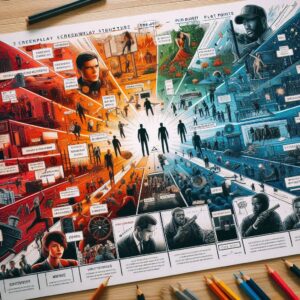
In the vast and mesmerizing world of filmmaking, where stories come alive on the silver screen, screenplay structure stands as the blueprint that guides the narrative journey from inception to completion. It’s the invisible framework that shapes the flow of the story, the pacing of the plot, and the emotional arc of the characters. Screenplay structure is both an art and a science, requiring meticulous planning, creativity, and a deep understanding of storytelling principles. In this exploration, we delve into the intricacies of screenplay structure, uncovering the techniques, strategies, and nuances that make for truly compelling and unforgettable storytelling.
At its core, screenplay structure is about creating a cohesive and engaging narrative that captivates audiences from beginning to end. Whether it’s a thrilling action-adventure, a heartfelt romance, or a thought-provoking drama, every screenplay follows a basic three-act structure that consists of an introduction, a middle, and a conclusion. Within this framework, writers have the freedom to explore their own unique ideas, characters, and themes, while adhering to the underlying principles of storytelling that have stood the test of time.

The first act of a screenplay, often referred to as the setup, introduces audiences to the world of the story, establishes the main characters and their goals, and sets the stage for the conflicts and obstacles that they will face. This is where we meet the protagonist, learn about their desires and motivations, and become invested in their journey. The first act typically ends with an inciting incident, a pivotal event that disrupts the protagonist’s life and sets the main conflict of the story in motion, propelling them into the second act.
The second act, also known as the confrontation, is where the bulk of the action and drama of the story takes place. This is where the protagonist faces a series of challenges, obstacles, and setbacks as they pursue their goals and grapple with the central conflict of the story. The second act is often the longest part of the screenplay and is divided into several key sequences or plot points, including the midpoint, where the protagonist confronts a major obstacle or revelation that changes the course of the story, and the climax, where the tension and stakes reach their peak, leading to a final showdown or resolution.
Finally, the third act, known as the resolution, brings the story to a satisfying conclusion, tying up loose ends, resolving conflicts, and providing closure for the characters and the audience. This is where the protagonist faces their final challenge, makes a crucial decision, and undergoes a personal transformation or revelation that leads to catharsis and resolution. The third act typically ends with a climax or resolution that brings the story full circle and leaves audiences with a sense of fulfillment and closure.
In addition to the basic three-act structure, many screenplays also incorporate additional elements such as subplots, flashbacks, and parallel storylines to add depth and complexity to the narrative. Subplots provide secondary conflicts and character arcs that complement and intersect with the main storyline, adding layers of intrigue and depth to the overall narrative. Flashbacks offer insights into the characters’ pasts, motivations, and relationships, enriching the storytelling with additional context and emotional resonance. Parallel storylines allow writers to explore different perspectives and themes, weaving together multiple threads of the narrative into a cohesive and compelling whole.

Moreover, screenplay structure also encompasses the use of pacing, rhythm, and tone to create a dynamic and engaging narrative that keeps audiences hooked from beginning to end.
Whether it’s a fast-paced action sequence, a slow-burning character moment, or a tense standoff between adversaries, pacing is what gives the story its energy, momentum, and emotional impact. By carefully controlling the flow of information and the timing of reveals, writers can create a sense of anticipation, suspense, and satisfaction that keeps audiences engaged and invested in the story.
Furthermore, screenplay structure relies heavily on the art of character development, the crafting of complex, multidimensional characters whose desires, flaws, and conflicts drive the narrative forward. Whether it’s the protagonist’s journey of self-discovery, the antagonist’s quest for power and domination, or the supporting characters’ struggles and triumphs, well-drawn characters are the heart and soul of any screenplay. By exploring the inner workings of characters’ minds and hearts, writers can create empathy, intrigue, and emotional investment, drawing audiences into their world and keeping them engaged from beginning to end.
In conclusion, screenplay structure is the blueprint that guides the narrative journey from inception to completion, providing writers with the framework they need to create compelling and engaging stories that captivate audiences from beginning to end. Whether through the use of a basic three-act structure, additional elements such as subplots and flashbacks, or techniques such as pacing, rhythm, and character development, screenplay structure is the foundation upon which great storytelling is built. As we celebrate the art and craft of screenplay structure, let us honor the writers who masterfully craft stories that entertain, enlighten, and inspire audiences around the world.
